
Mokume-Gane: The Art & Science of Japanese Wood-Grain Metal
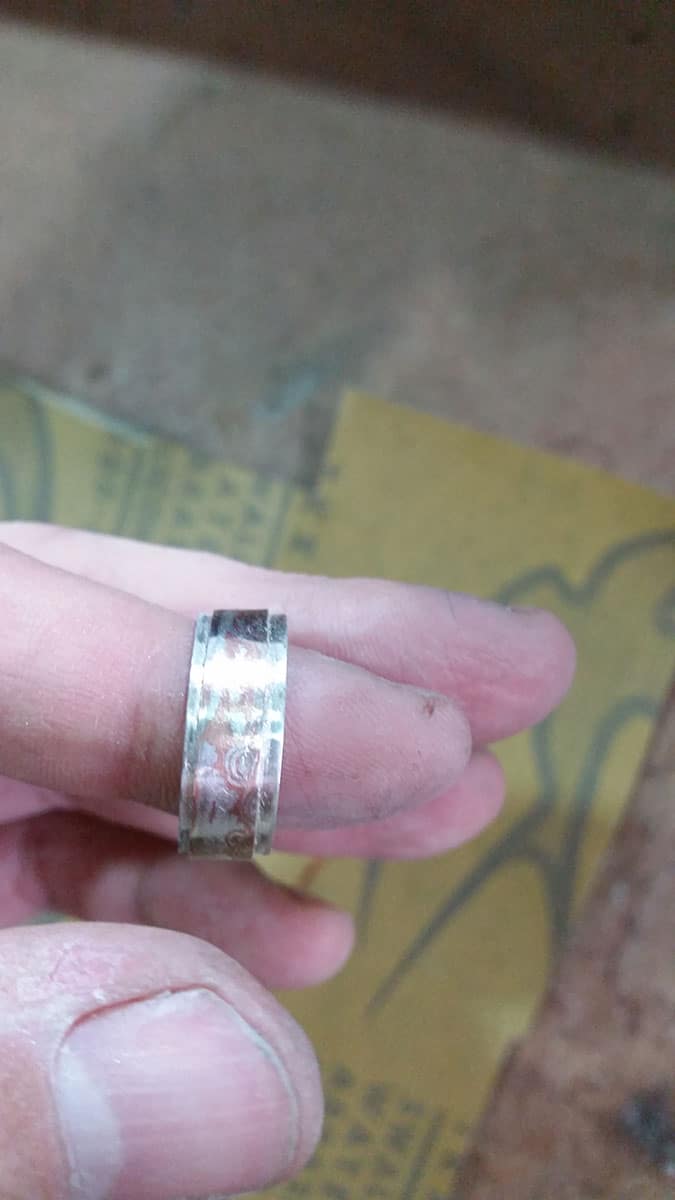
Mokume-gane (木目金) is a Japanese metal-lamination technique in which alternating layers of dissimilar metals are fused, forged, and painstakingly sculpted until fluid, organic striations emerge—striations so reminiscent of timber that early admirers nicknamed the material “wood-grain metal.” Unlike modern printed or plated imitations, true mokume-gane gains its pattern from the metal itself: every ripple is physical, not superficial. The result is a billet—or a bar—whose cross-section resembles cut cedar, yet whose surface glints with copper, silver, or multi-karat gold. Today the craft is prized for wedding rings, statement knives, watch dials, objets d’art, and even architectural inlays. Collectors value mokume-gane for aesthetic depth, tactile warmth, and a lineage that stretches back more than 350 years.
Etymology & Literal Meaning
The phrase breaks into three kanji: moku (木, wood), me (目, eye or grain), and gane (金, metal). Combined, they convey “wood-eye metal” or, more poetically, “wood-grain metal.” The name itself served as a selling point in feudal Japan, where nature-inspired aesthetics were revered. Craftspeople intentionally echoed the look of prized woods—especially ancient keyaki (zelkova) and cryptomeria—translating arboreal patterns into enduring alloys.
Historical Timeline: From Samurai Prestige to Global Luxury
1. Samurai & Edo-Period Innovation (c. 1650-1868)
Mid-17th-century Japan enjoyed relative peace under Tokugawa rule. With battlefield demand low, the katana evolved from weapon to wearable testament of rank. Sword fittings (tsuba, fuchi, kashira) became canvases for metal artists. In Akita, master Denbei Shoami experimented with stacking sheets of gold, silver, copper, shakudō (copper–gold with black patina), and shibuichi (copper–silver alloy). By heating just below melting points, he achieved a liquid-phase diffusion bond, then chiseled and forged to reveal layers—birthing mokume-gane as a luxury embellishment rather than a structural necessity.
2. Meiji Decline & Artisan Pivot (1868-1900)
The 1868 Meiji Restoration dissolved the shogunate and outlawed public sword-wearing. With the market for ornate fittings gone, many ateliers folded. The few surviving smiths repurposed skills for hairpins, pipe lids, and small curios aimed at Western tourists. Paradoxically, this “decline” sowed seeds for global exposure: portable trinkets traveled farther than bulky blades.
3. Victorian Fascination & Tiffany’s Paris Prizes (1877-1900)
Trans-Pacific trade fairs introduced Europe and America to nihonga aesthetics. At Tiffany & Co., design director Edward C. Moore urged silversmiths to replicate mokume-gane. By 1878, Tiffany displayed a twenty-layer “Conglomerate Vase” at the Paris Exposition, winning the Grand Prix. Newspapers marveled at a technique “rendering metal as supple as maple.” Western demand soared, though true Japanese billets remained rare and expensive.
4. 20th-Century Renaissance & Academic Adoption (1970s → Present)
By the 1950s, fewer than a dozen Japanese artisans still practised mokume-gane. The revival began when metalsmith and educator Hiroko Sato Pijanowski studied under Norio Tamagawa, then carried the knowledge to American universities. Classroom exposure ignited research into controlled-atmosphere bonding, hydraulic presses, and exotic alloys. Conferences like the Santa Fe Symposium published peer-reviewed papers, standardising temperatures, pressures, and diffusion times. Today one can order billets that mix platinum with iron or combine 18k rose gold with aerospace-grade titanium—impossible feats in Shoami’s era.
Metals & Alloys Used Today
The palette has expanded dramatically, giving designers freedom to pair colour, hardness, and corrosion resistance:
- Precious metals: 24k, 22k, 18k yellow gold; 14k rose and green gold; palladium-white gold; fine silver; sterling silver; and platinum.
- Traditional Japanese alloys: Shakudō (95-96 % Cu, 4-5 % Au) patinates jet-black; Shibuichi (75 % Cu, 25 % Ag) yields soft dove-grey; Kuromido (99 % Cu, 1 % Arsenic) achieves deep chocolate brown.
- Base & reactive metals: copper, brass, bronze, nickel silver, stainless steel, commercially pure titanium, zirconium.
- Experimental inclusions: niobium and tantalum for iridescent oxide layers; meteoritic iron for cosmic storytelling.
Choosing metals involves balancing colour contrast with metallurgical compatibility. Alloys must have closely matched coefficients of thermal expansion to prevent delamination during heating and quenching cycles.
Step-by-Step Fabrication Process
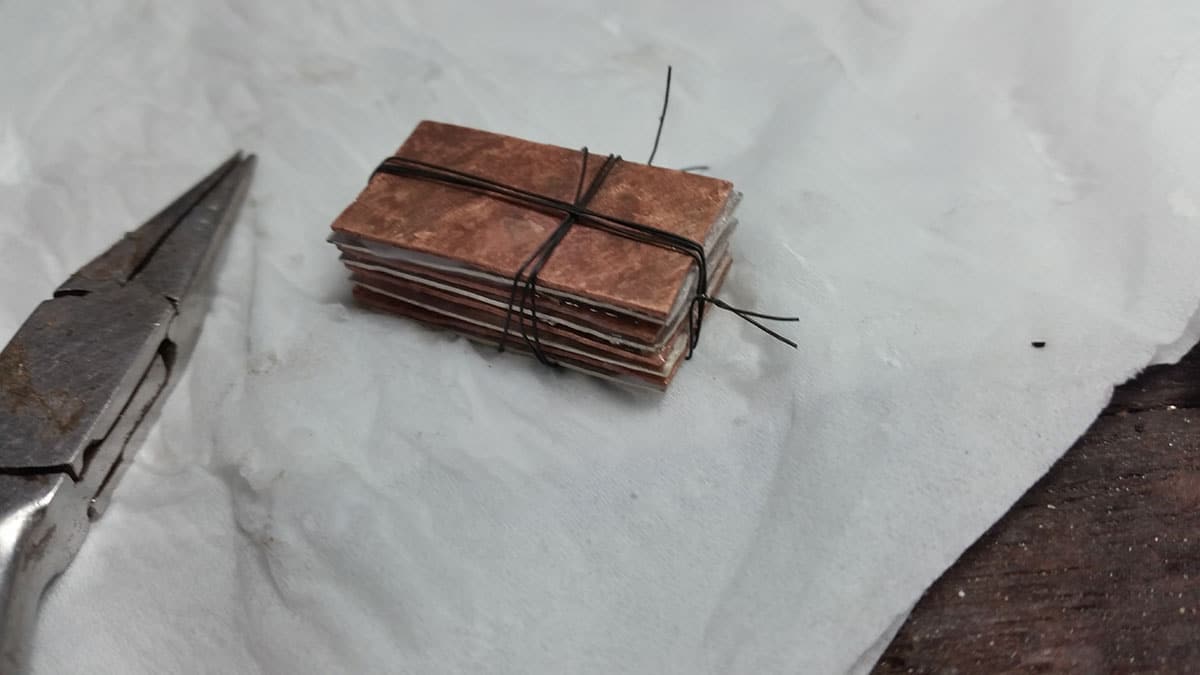
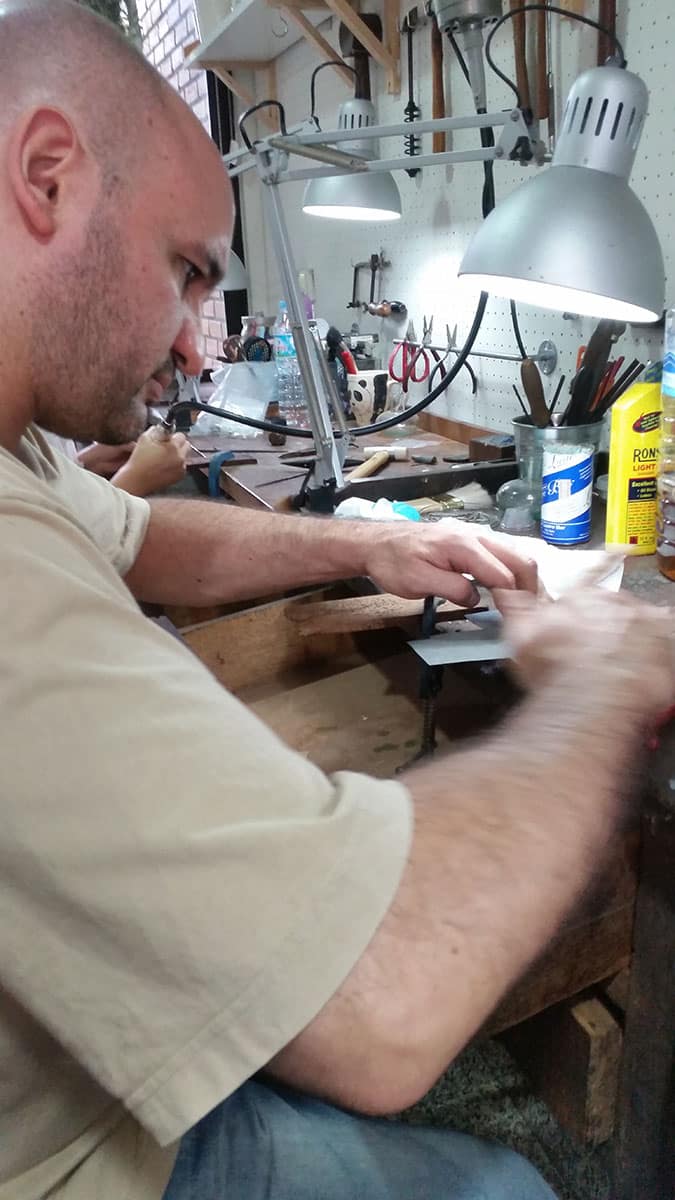
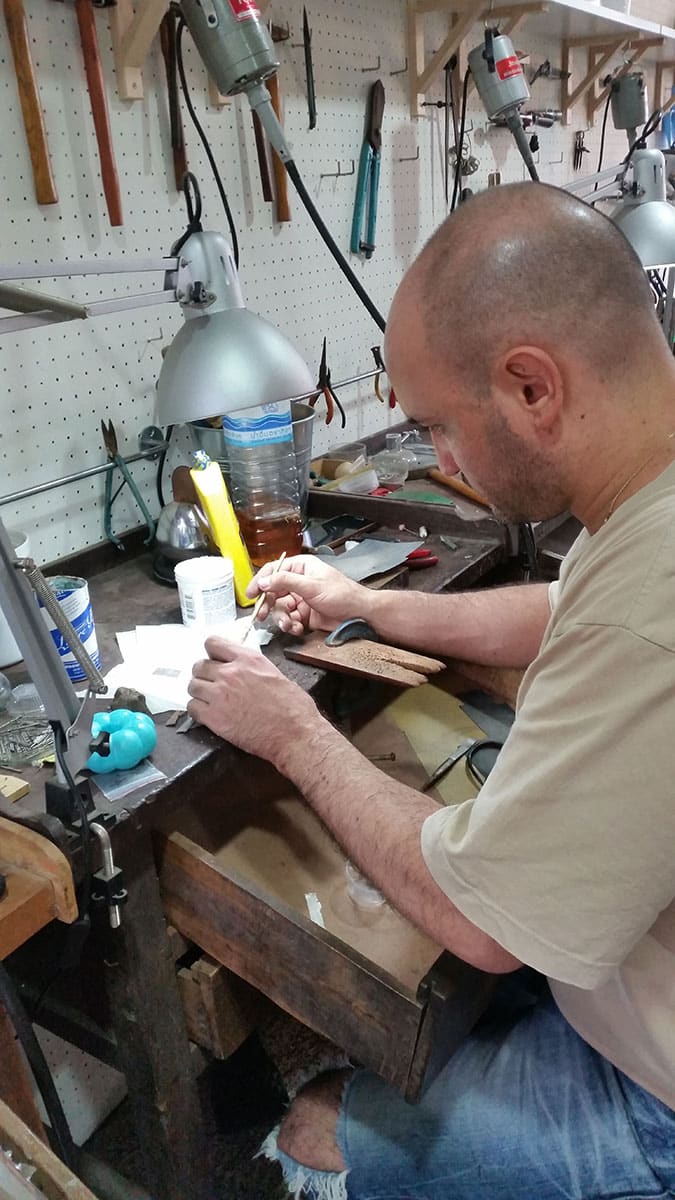
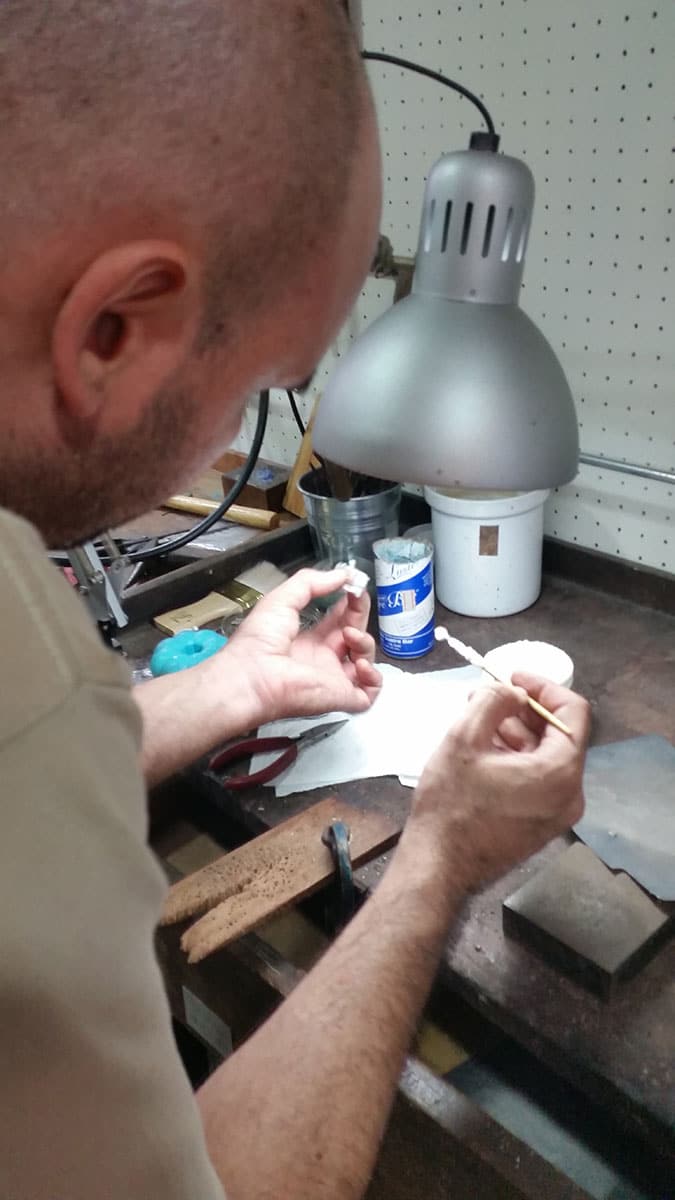
Below is a modern workflow used by professional mokume-gane studios and advanced hobbyists alike. An average 20-layer billet of 50 × 50 × 6 mm may require 8-12 hours of active labour plus multiple heat cycles.
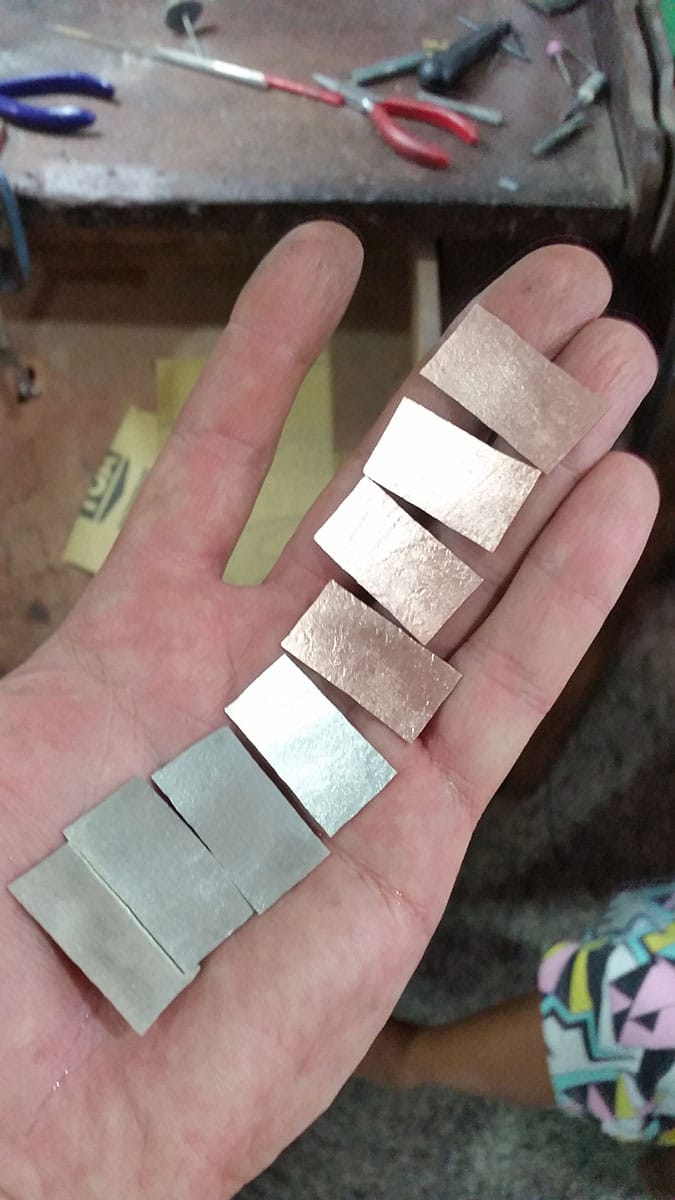
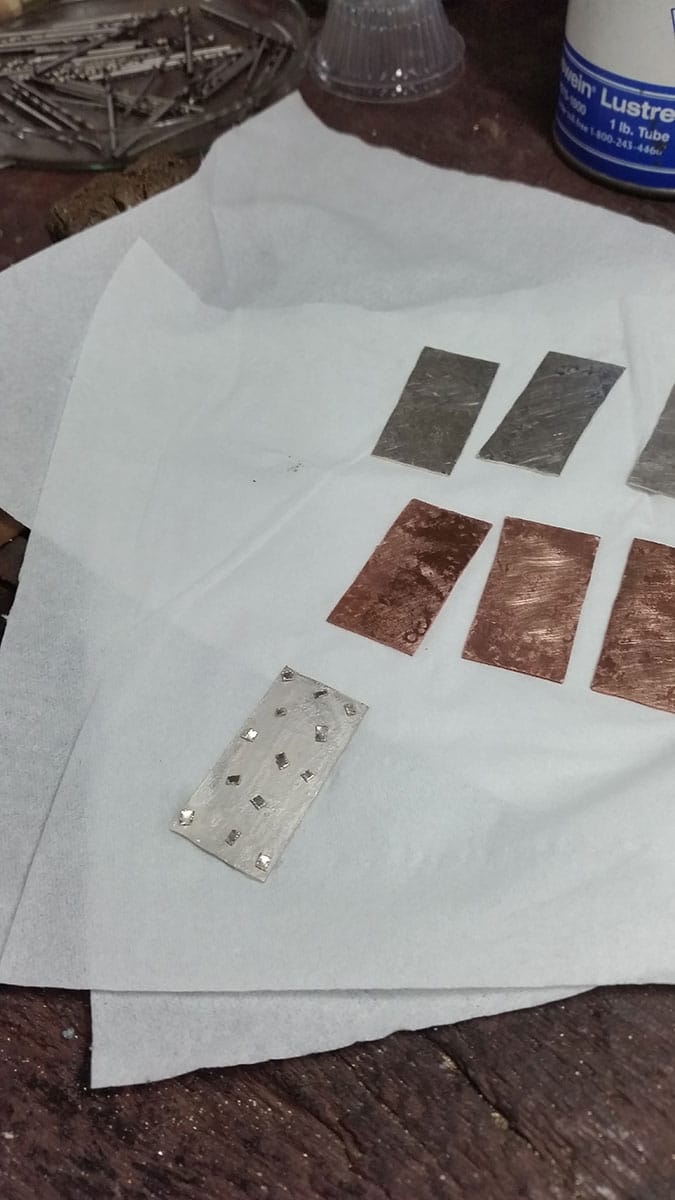
1. Surface Preparation
Sheets are cut, planished, and abraded to 320-grit to remove oxidation. Cleanliness is paramount: microscopic oil spots can sabotage diffusion. Many smiths rinse plates in acetone, follow with ultrasonic cleaning, and finish with a brief acid pickle.
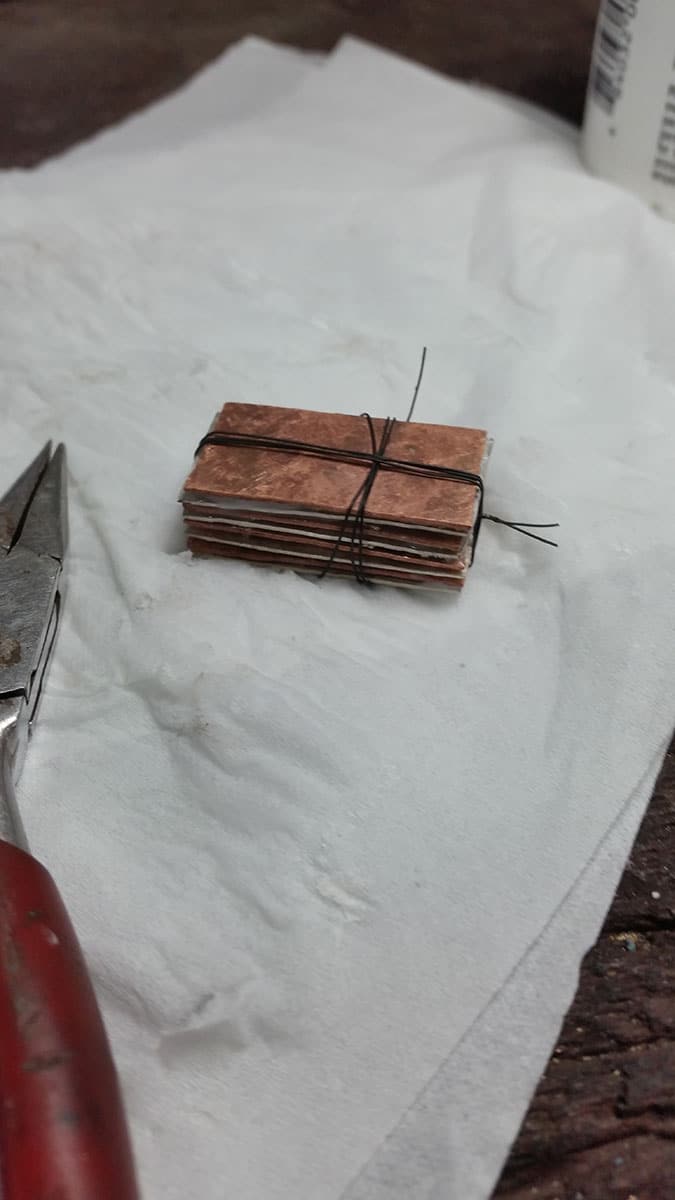
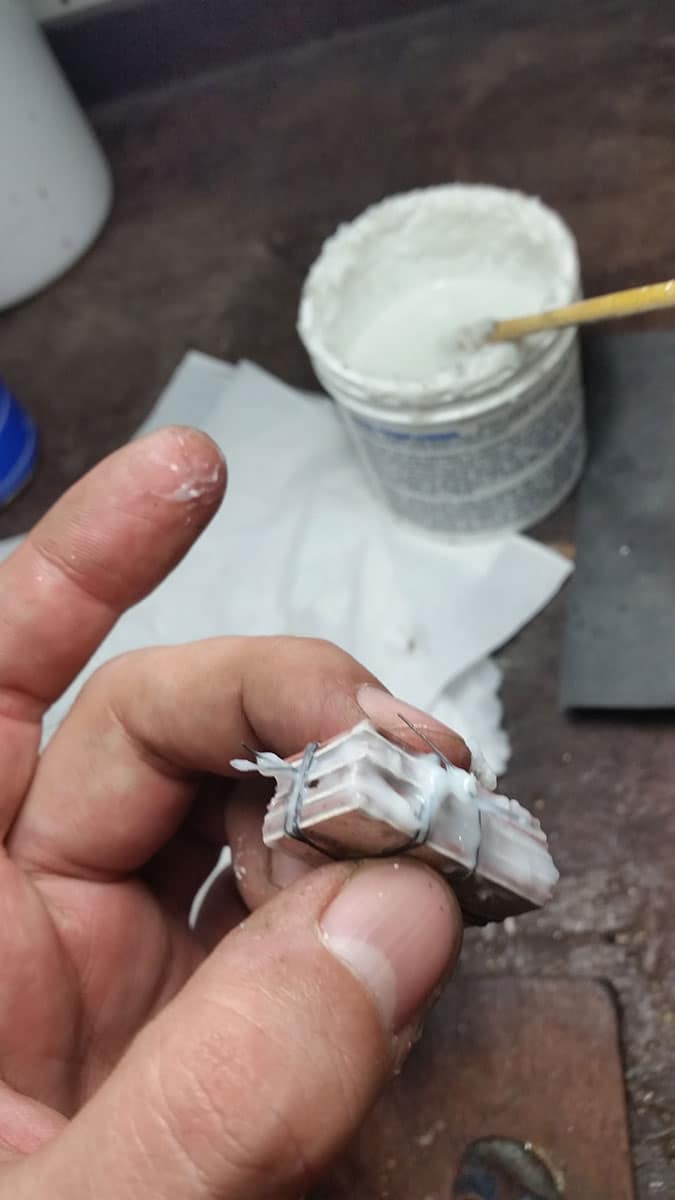
2. Stacking & Clamp Assembly
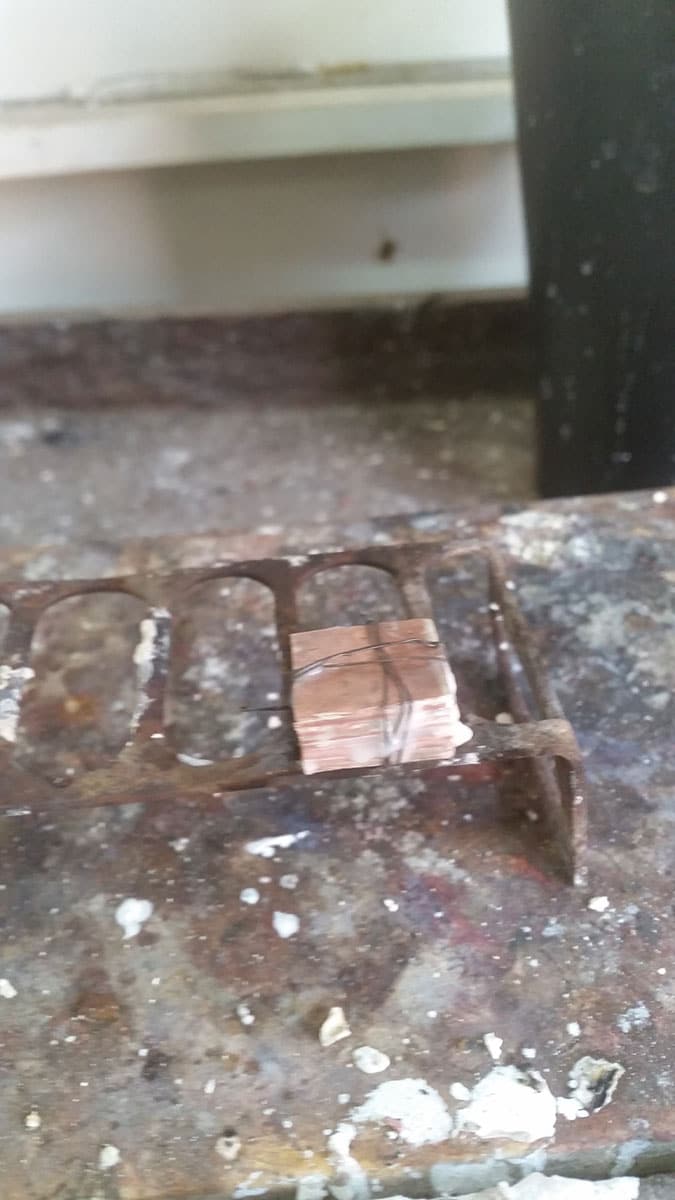
Layers are alternated for desired colour sequence. The stack is placed between stainless-steel torque plates, bolted to 10,000-20,000 N of compression, or inserted into a graphite box for vacuum-hot-press bonding.
3. Diffusion Bonding
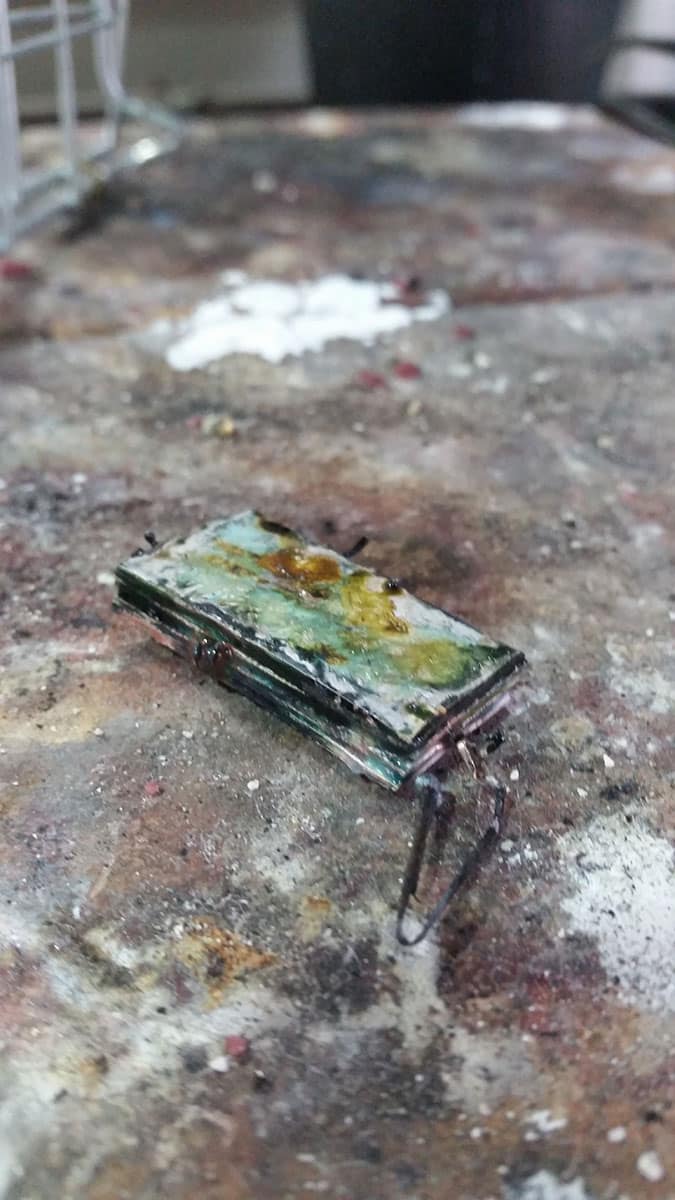
The assembly is heated in an electric kiln or gas forge. Target temperatures sit just above the solidus of the lowest-melting alloy—often 760-900 °C—held for 10-30 minutes. Under compression, atoms migrate across boundaries, forging a monolithic block without solder. The billet is then air-cooled or furnace-cooled to minimise thermal shock.
4. Reduction & Annealing Cycles
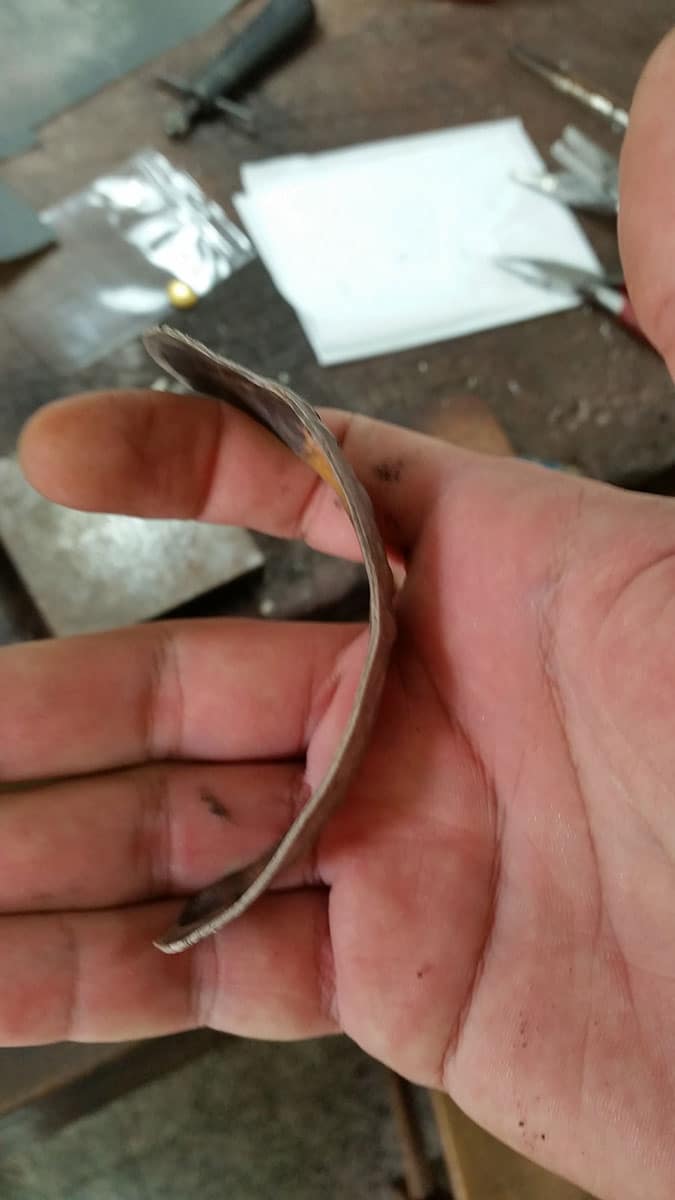
The billet is forged or rolled to elongate grains, then annealed to soften work-hardened metals. Multiple reduction-anneal cycles thin the block into usable sheet or bar while ensuring internal cohesion.
5. Pattern Revelation
How Patterns Are Developed
Artists employ an arsenal of techniques to sculpt three-dimensional relief, which later compresses into planar patterns:
- Twist Pattern: A square rod is heated and torsioned 360-720°, forming barber-pole stripes.
- Ladder Pattern: Parallel grooves are filed, then the rod is flattened; grooves stretch into undulating “rungs.”
- Burl Pattern: Ball burrs drill hemispheric pits; when flattened, these pits bloom into eye-like whorls.
- Raindrop Pattern: Tapered divots are punched randomly before rolling, yielding concentric droplet rings.
- Wave Pattern: Alternating deep and shallow chisels create tidal curves reminiscent of ukiyo-e surf.
Complex billets might combine two or three pattern zones in a single ring blank, producing seamless fades between ladder and burl, for example.
Patination, Polishing & Final Touches
Raw mokume-gane looks attractive, but controlled patination elevates contrast. Traditionalists favour the niiro bath: a simmering solution of copper acetate, sodium chloride, and alum, into which the piece is dipped for 5-30 minutes. Silver layers remain brilliant; copper alloys darken from russet to charcoal. Contemporary makers also explore liver-of-sulfur for blue-black silver, or heat tinting titanium for iridescence. Final polishing is done with 2000-grit abrasive and rouge-charged cotton buffs, spotlighting highs while retaining dark recesses—much like French polishing a burled walnut tabletop.
Modern-Day Applications: Beyond Sword Guards
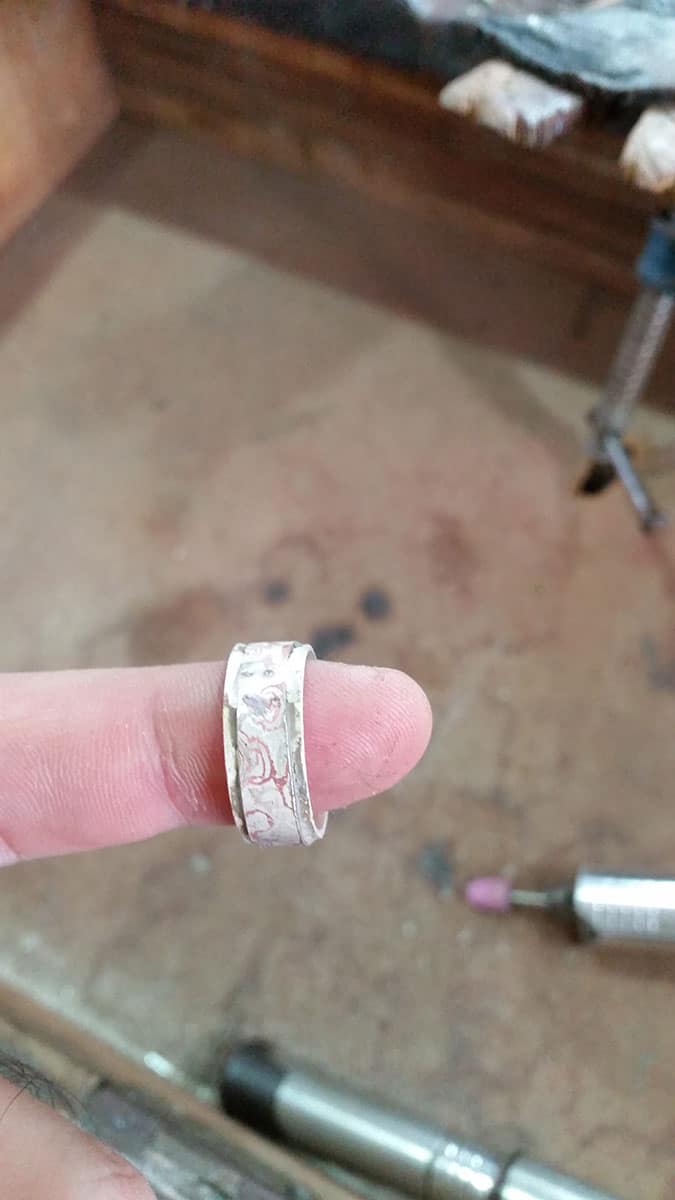
Jewellery: Mokume-gane wedding bands symbolise partnership—distinct metals forged into one. Retailers offer custom inserts (e.g., Cambodian sapphire settings) that tie into regional narratives.
Cutlery: Artisan chef’s knives use mokume bolsters or full tangs, marrying functionality with gallery-level aesthetics.
Watchmaking: Independent horologists press mokume into dials and bezels; the grain plays with light as the wrist moves.
Fine Art & Décor: Sculptors inlay mokume panels into wooden presentation boxes or mount billets as minimalist wall art.
Architectural Details: High-end interiors commission mokume door hardware or elevator buttons—subtle luxury for tactile points of contact.
Care, Cleaning & Longevity
Because mokume-gane juxtaposes metals with different reactivity, owners should follow hybrid care rules:
- Remove rings before chlorinated pools or hot tubs; chlorine attacks silver and raises microscopic galvanic currents between layers.
- Wash gently with pH-neutral soap, rinse, and pat dry. Avoid ultrasonic baths unless the piece is solder-free and properly bonded.
- Re-finish patina every few years if high contrast is desired. Most artisans offer affordable touch-up services.
- Store in a soft pouch separate from harder gemstones that could abrade the surface.
Environmental & Ethical Aspects
Mokume-gane aligns with the growing demand for responsible luxury:
- Waste Reduction: Offcuts of gold or silver too small for casting can be layered into billets rather than sold as scrap.
- Longevity over Fast Fashion: A single heirloom ring can span generations, reducing the need for multiple replacements.
- Reclaimed Metals: Clients often supply family jewellery to integrate sentimental alloys, lowering virgin-mining impact.
- Local Craftsmanship: Commissioning from regional studios supports artisanal economies—important for destinations like Siem Reap, where tourism drives gem and jewellery sales.
Comparisons with Similar Techniques
| Feature | Mokume-Gane | Damascus Steel | Sheffield Plate |
|---|---|---|---|
| Metals | Precious & non-ferrous alloys | High-carbon & mild steels | Silver + copper |
| Visual Style | Wood-like swirls | Watered wavy lines | Uniform silver face |
| Bonding | Diffusion/solid-state | Forge-welding | Roll-bonded |
| Main Use Today | Jewellery, art | Knife blades | Antique tableware |
This comparison helps consumers differentiate true mokume-gane from etched damascus patterns or silver-plated ware, ensuring informed purchases.
Buying Guide: How to Choose Authentic Mokume-Gane
Whether shopping in person or online, apply these criteria:
- Source Transparency: Reputable makers disclose metal composition and bonding method. Ask for a studio certificate.
- Seam Inspection: Look at ring interiors or bar ends; pattern layers should continue unbroken, proving full-depth pattern rather than surface etching.
- Alloy Disclosure for Allergies: Nickel silver and brass may irritate sensitive skin; opt for nickel-free palladium golds or sterling silver stacks.
- Sizing Policy: Many mokume rings cannot be resized conventionally; ensure the jeweller offers lifetime exchange or laser-sizing options.
- Matching Sets: For wedding bands or cufflink pairs, order pieces from the same billet for consistent grain direction.
- After-Sales Care: Confirm availability of repatination and refinishing services, especially if purchasing abroad.
Frequently Asked Questions
Is the pattern only on the surface?
No. In genuine mokume-gane the pattern goes all the way through. You can polish it decades later and the grain remains.
Will layers delaminate over time?
When properly diffusion-bonded, mokume-gane is as structurally sound as a homogenous alloy. Delamination usually points to inadequate pressure or temperature control during fabrication.
Can gemstones be flush-set?
Yes, but the setter must account for varying hardness. Many jewellers use laser welds or reinforced bezels when setting sapphires or diamonds.
Does patina wear off?
The dark tones on copper-rich layers will lighten in high-friction spots. Some owners enjoy this living finish; others schedule periodic re-patination.
Key Takeaways: Why Mokume-Gane Matters
Mokume-gane is more than a decorative flourish; it is a dialogue between metallurgy, history, and design. From Denbei Shoami’s sword guards to contemporary wedding rings, the process marries opposites: soft gold and hard copper, ancient craft and modern CNC, pictorial grain and industrial precision. Each finished object is literally unrepeatable—a frozen record of heat, pressure, and human intent. For collectors, that irreproducibility is the ultimate luxury; for artisans, it is an endless frontier for experimentation.
